

If there is such a thing as beauty, we need to be able to recognize it. We need good taste to make good things. Instead of treating beauty as an airy abstraction, to be either blathered about or avoided depending on how one feels about airy abstractions, let's try considering it as a practical question: how do you make good stuff? - Paul Graham

If you exist in a niche similar to mine - product design, branding, and everything in between - you might’ve noticed the word taste popping up everywhere.
Why? The insanely fast raise of AI specially since the beginning of 2026, has launched an overwhelming amount of tools and workflows into the market. All of them with a shared purpose: efficiency.
Tasks and processes that used to take a significant amount of time and effort, can now be done in a matter of a few minutes or seconds. From writing code to develop an app to creating marketing plans and brand assets, AI is taking over the execution.
If we think of these AI agents as an army of really fast but inexperienced* interns, they will do whatever we tell them. But if we want the quality of the output to be good, the direction that we provide needs to be good. And where does that come from? Good taste.
What is taste?
This word is being thrown around loosely across industries but to really understand it, I’ve broken it down into three skills that from my perspective result in what we’re calling taste: knowledge, creativity, and intuition.
Knowledge
Implicit knowledge is developed through the more formal kinds of training. In product design, knowledge can come from studying and applying the principles and theories that have been a foundation for the field.
Usability heuristics by Jakob Nielsen
10 principles of good design by Dieter Rams
Gestalt principles by Max Wertheimer, Kurt Koffka, and Wolfgang Kohler.
Proper use of visual elements such as color, grid, typography, hierarchy, and so on.
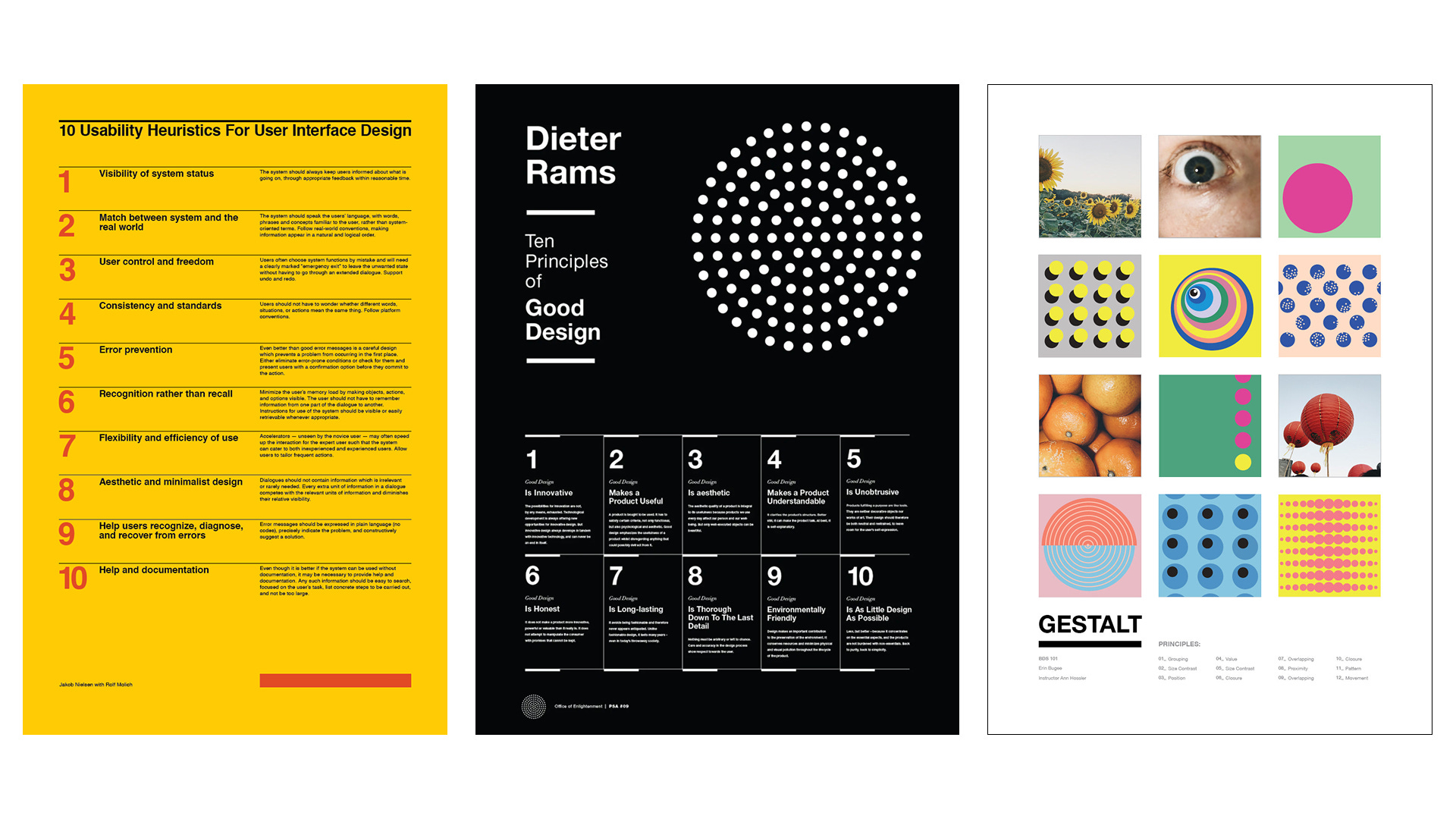
In creative and artistic fields, good work is often and mistakenly seen as subjective. I think this layer of “textbook” knowledge takes away that subjectiveness and enables us to properly argue and differentiate good from bad.
Taste isn’t elitist or exclusionary for the sake of exclusivity; rather, it recognises and values the depth of understanding required to meaningfully discern quality from mediocrity. Because real taste isn’t just a matter of preference - it’s a reflection of attention, study, and time.
Creativity
In the angle of product development, Tomer Cohen defines creativity as “the ability to come up with possibilities beyond the obvious”. Breaking out of established components and generating ideas from first principles: If was starting from zero, how would I solve this problem?
That blank canvas can be intimidating so here’s where a key element of creativity comes in: exposure.
Exposing ourselves to good design, noticing the things that work well and the reasons why they click with us, develops this mental archive that we can later reference and implement into our work.
For product design references I usually go to:
Digging through our own domain works well as a benchmark, but in order to tap into the depths of our creative mind and create truly unique outputs, drawing inspiration from other sources is a key part of the process.
Photography, books, movies, architecture, music, and even physical objects, allow us to pull ideas from sources that are going unnoticed by others, giving our work a differentiating factor.


Intuition
The art of simply getting it. Doing things right without thinking. The way Miles Davis reshaped jazz through improvisation, and DaVinci recognized patterns across art, science, and engineering. It’s easy to think these people are just born with intuition but the reality is that obsession and countless hours of experience, are key to amplify whatever raw skill already exists.
Cognitively speaking, intuition is understood as the result of unconscious mental processes. Our brains are very good at pulling past memories, patterns, and experiences, to effortlessly match them with current situations. So in order to develop intuition, it’s important to give our brain resources to pull from.
Remember exposure? Experience is its best friend.
Getting our hands dirty, learning by doing, and solving real problems, are all great for the intuition muscle. This can be done through the day to day of a job, picking up projects on the side, or simply experimenting concepts to solve our own unmet needs.
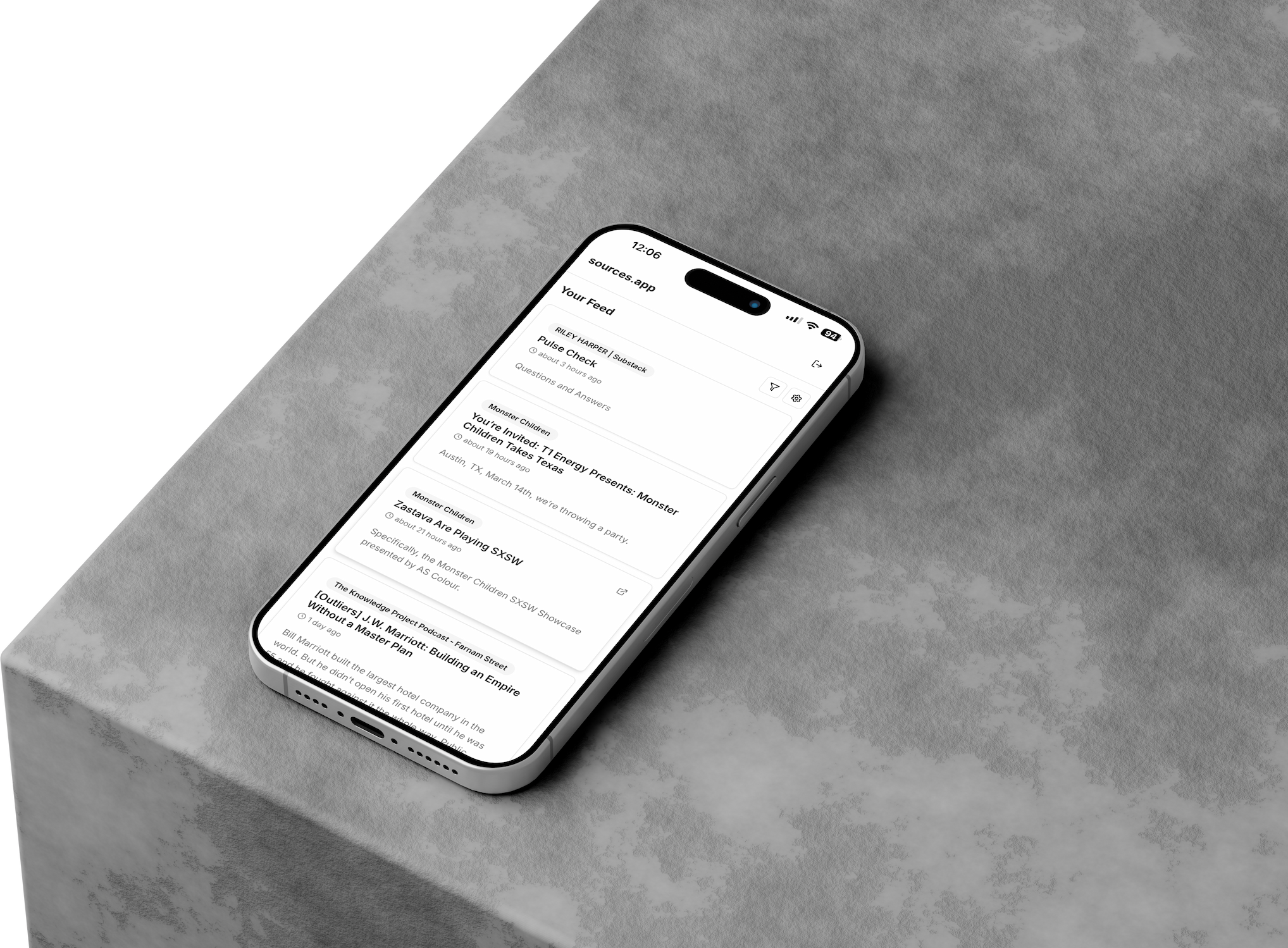
Quick example and shameless plug: I recently spent a couple of weeks on Lovable building out an idea that’s lived in my head for a long time. Born out of the need to consume content in a more conscious way, sources is a content aggregator where you can curate your own feed with the content you’re actually interested in. My feed tends to include posts from:
Riley Harper (all things lifestyle on substack)
Monster Children (music, skate, surf blog)
Farnam Street (podcast for getting smart)
Taste and judgement are being talked about a lot these days and they are closely related to the ongoing AI conversation. People are holding on to these skills for dear life as the key to maintain human relevance in these crazy AI times.
In the tech industry, the amount of tools and resources coming out every day can be exhausing and overwhelming to keep up with. I’m personally finding comfort in thinking that the technology is only as good as the direction we provide it.
So let’s keep calm and get tasteful!
AI is taking over execution... which is great... until you realize most people don’t actually know what “good” looks like. Taste is no longer a nice-to-have. It’s what turns output into something worth keeping. Love it!
YOU are HOT